


This week, we’re moving from land to sea with a look at Foggy, a yacht designed by none other than Frank Gehry. It’s not unheard of for an architect to design a yacht — Philippe Starck designed Venus for Steve Jobs, John Pawson designed himself a racing yacht, and Norm Architects did work for Y7 and Y9 — but it’s even rarer for an architect to design one of their own.
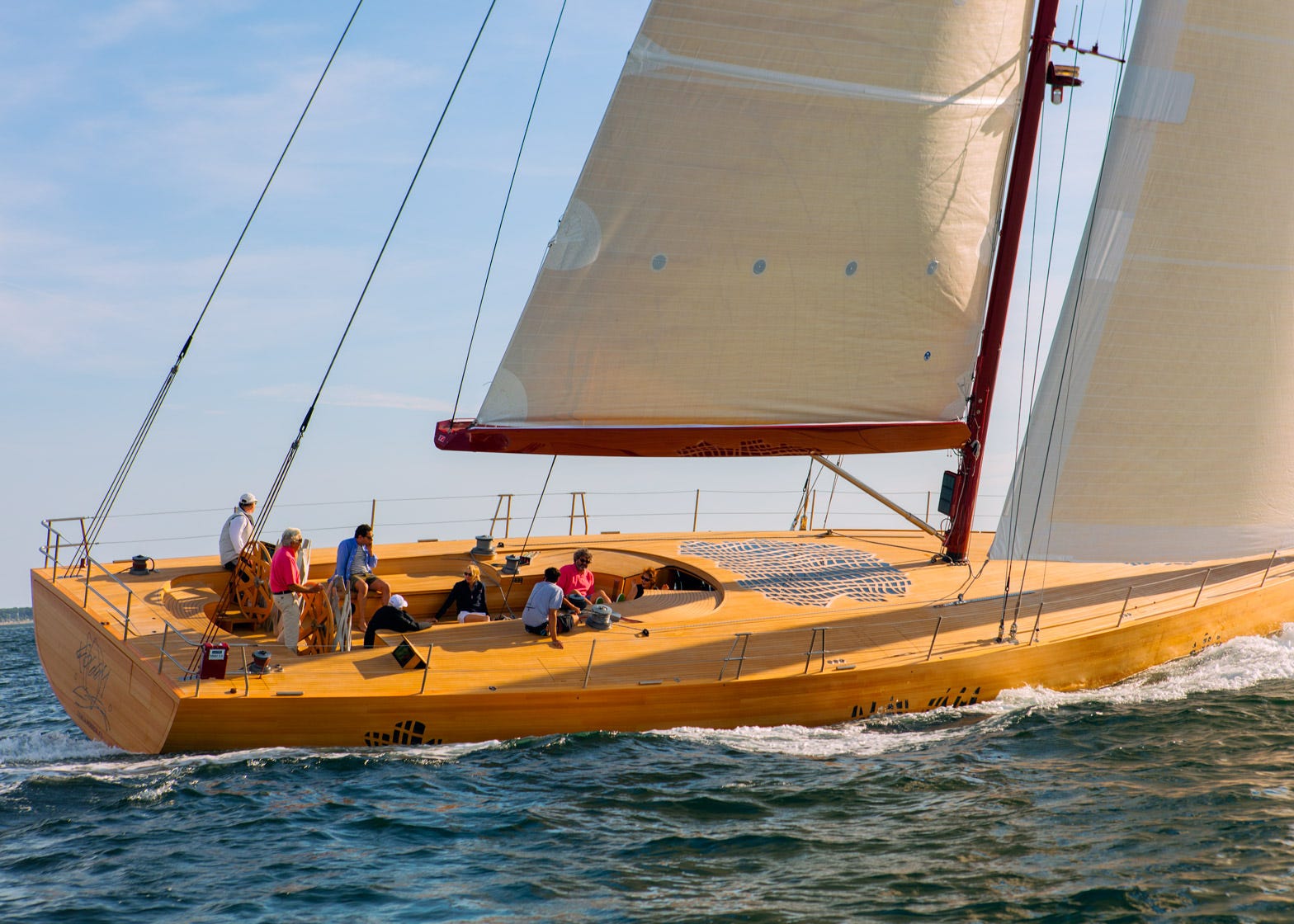
Gehry wasn’t a stranger to sailing. He’d belonged to the California Yacht Club out of Marina del Rey, and spent years sailing and racing his Beneteau (also called Foggy). The Guggenheim Museum Bilbao, and the Walt Disney Concert Hall were designed to evoke the sense of wind and sails in their form. It makes sense then that one of his most personal reflections would be on the water. It was something he’d thought about for years. “I never had the resources before,” he said. “And once I did I was busy doing my buildings.” He finally designed Foggy in 2018.
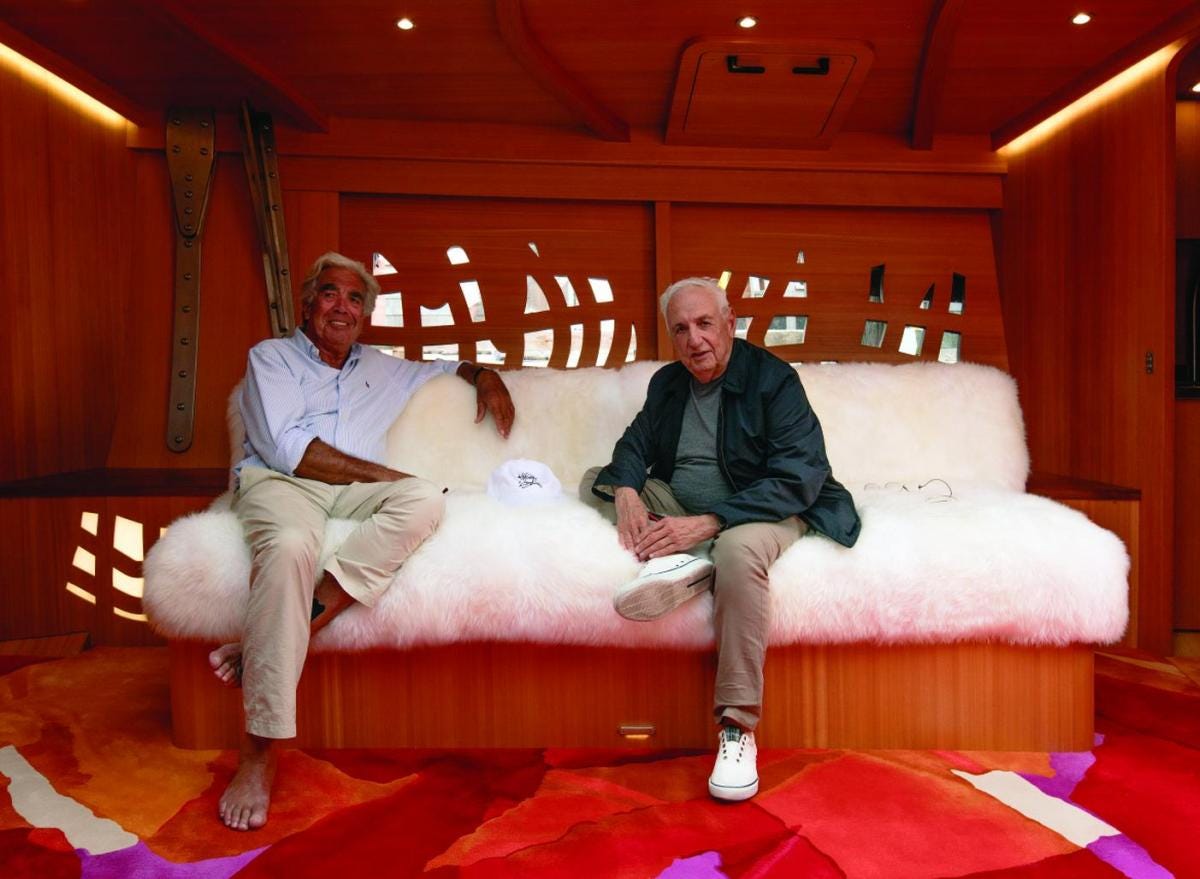
Over the last few decades, yacht design went mass market. Enthusiasts wanted a life of luxury on the water without sacrificing performance, and it led to a surge of yachts that feel more like condos than boats.
There’s a disconnect when you go below on a Beneteau. It’s comfortable, but the interior isn’t designed to move with the boat. You lose a sense of where you are. The boat’s in motion, but your living room is indistinguishable from your living room at home.
Racing yachts are good at the opposite. You strip enough out that you’re fully aware you’re in a high-performance shell, but they’re not somewhere you’d want to spend time. They’re designed for performance, not inhabitation. “The boat has to work.” On a boat, everything is a tradeoff.
Most boats either remove you from the experience or overwhelm you with it. In doing so, they make the ocean feel smaller, more controlled than it actually is.
Like Gehry’s larger projects, stepping inside Foggy feels more like being inside a sculpted instrument, closer to a violin or cello than a yacht. The most striking part of the design is the lattice-work portholes and skylights, which cast light and shadows across the interior in fragmented, shifting patterns. I’m reminded of Ji Cheng’s idea of “borrowed scenery,” that framing a view makes you more aware of where you are, though Gehry’s framing is less about stable presence and more about controlled disorientation.
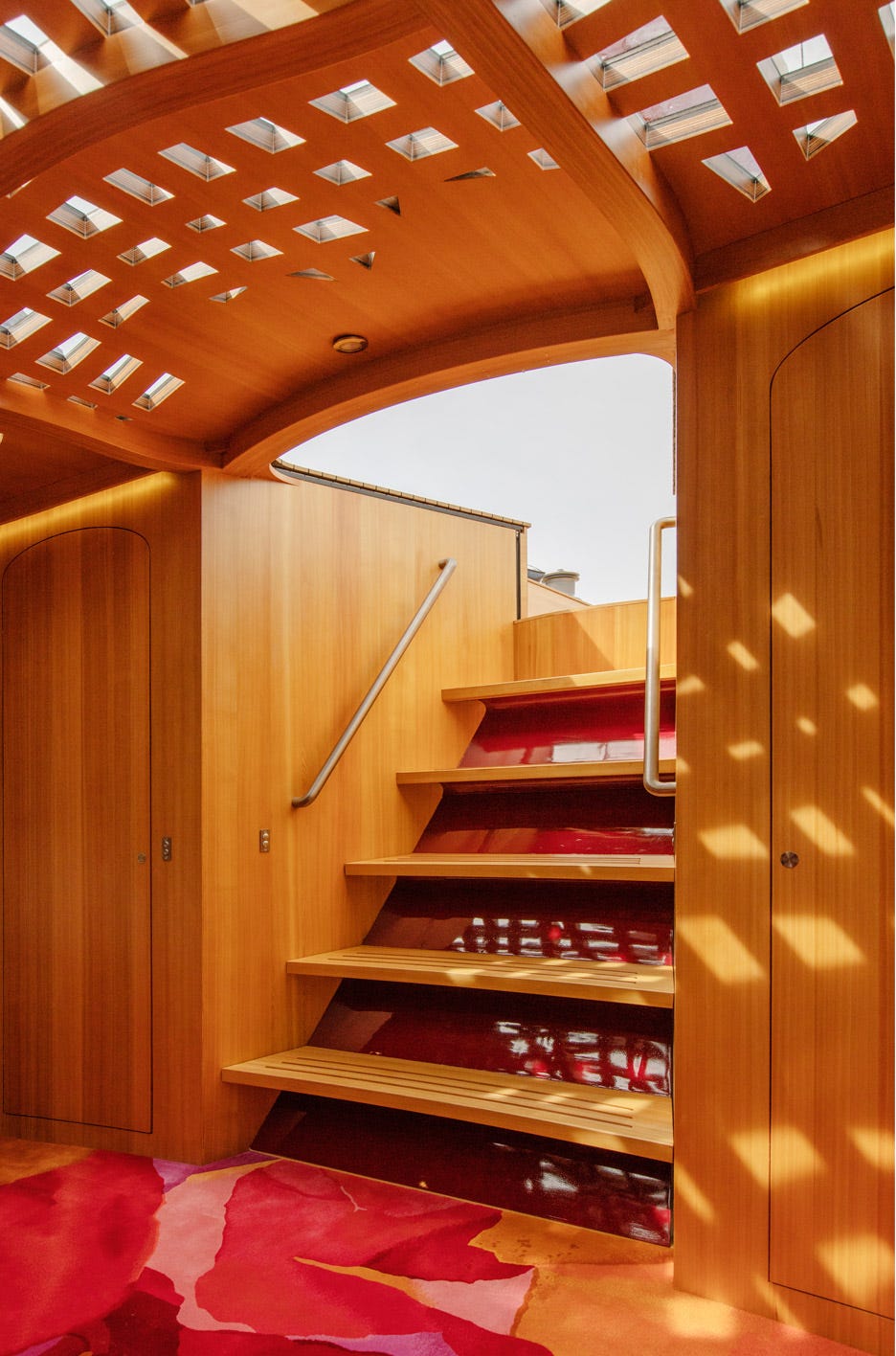
You feel it even in the colors and materials. A psychedelic carpet by Joyce Shin, Gehry’s daughter-in-law, pushes against the usual neutrality of boat interiors that try to smooth over movement, instead introducing variation and texture that keeps you aware of the space around you. Gehry even pushed against carbon fiber in favor of wood — heavier, less efficient, but closer to how a boat should feel. It moves away from the traditional open plan that merges the saloon, galley, and living spaces into one continuous room. In its place are corridors and passageways, a sequence of spaces that you move through, rather than settle into.
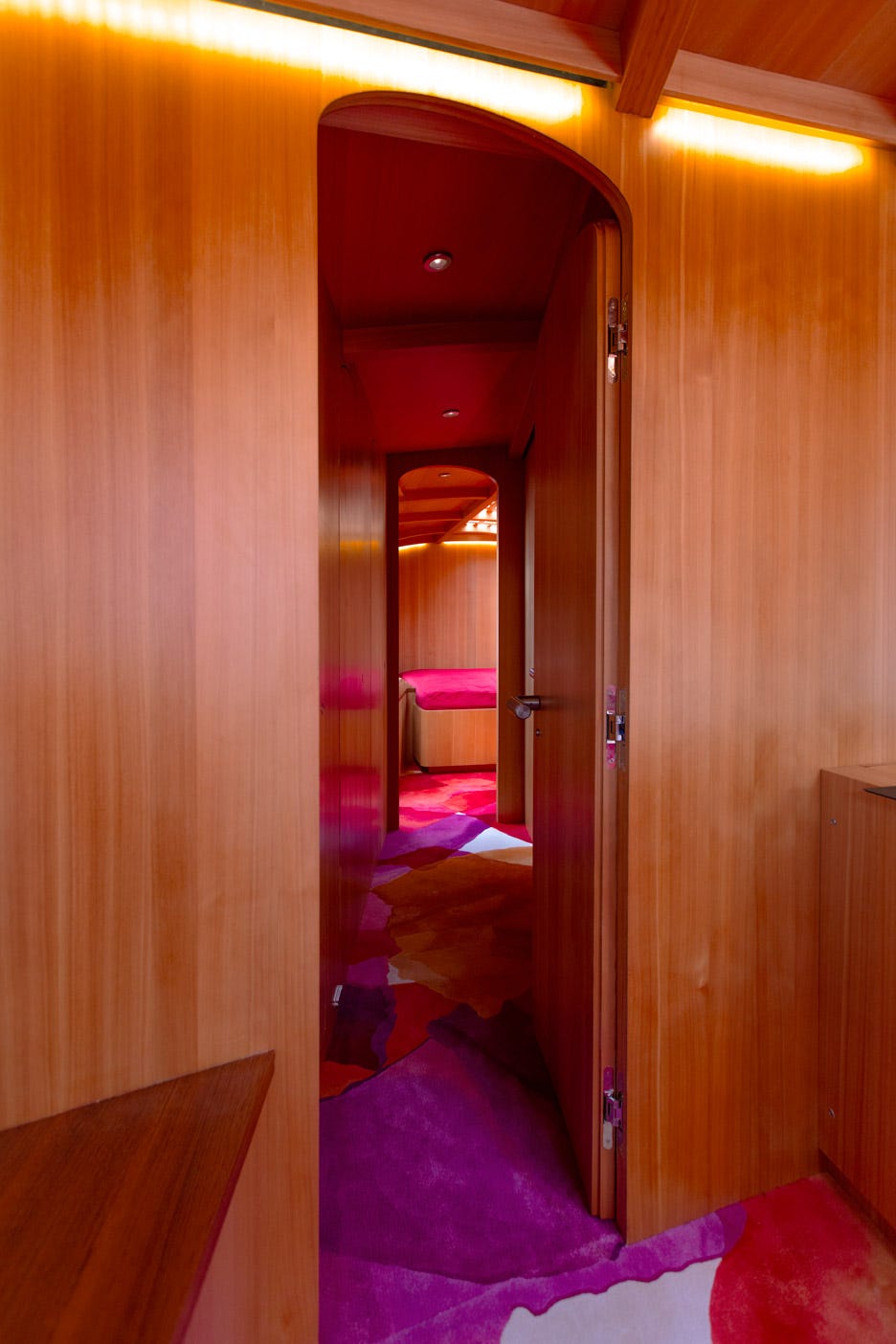
To be down below in Gehry’s yacht is to feel the motion of the ocean, the ebb and flow of the horizon, the reflection of light on the water in momentary glimpses. You’re acutely aware of the instrument you’re in, designed to move you through this place.
I fell in love with sailing for the feeling. The way the boat responds in the wind, the way the helm reacts in a gust, the way you feel connected to the water. Foggy makes the ocean feel a little bigger.