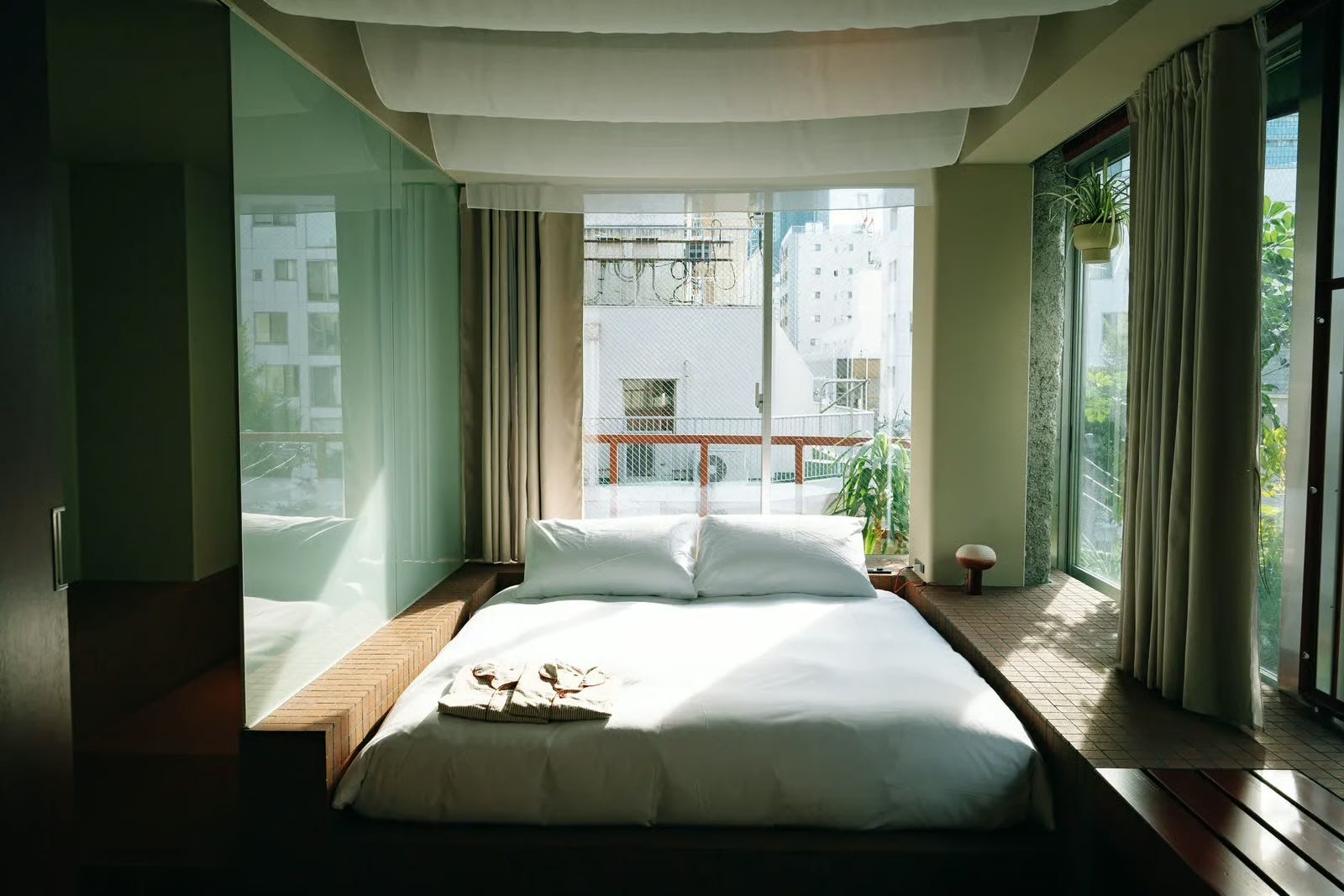

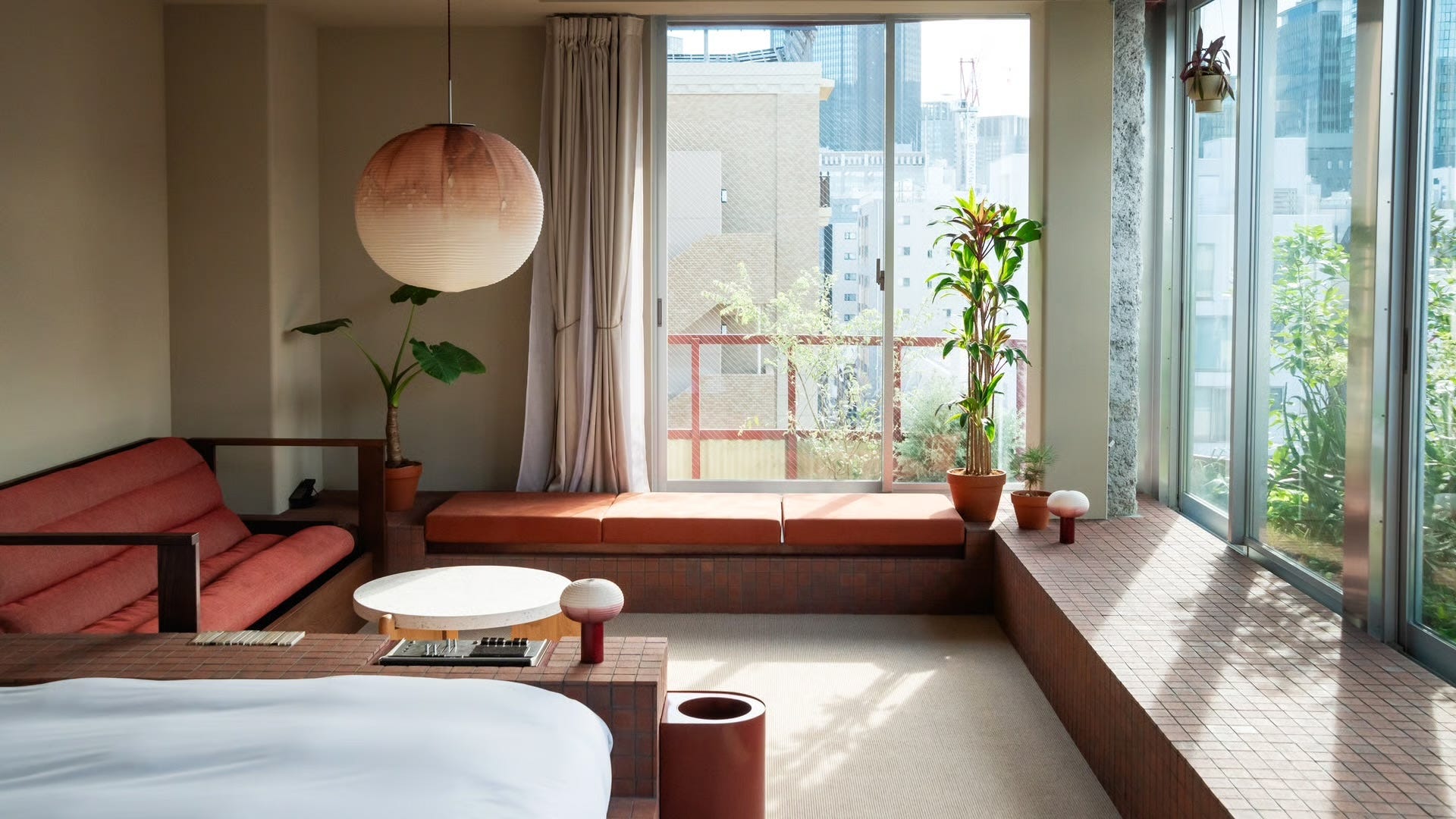
You’d be forgiven for not wanting to leave your room at SOIL Nihonbashi. It’s the kind of room you might hope to find yourself in during a Perfect Days-like fantasy, bathed in warm, filtered light, surrounded by brick tiles borrowed from the architectural language of Ningyocho, a vintage cassette player and a library of tapes, some passed along by neighbors of the hotel, and sounds from occasional passing cars and neighborhood greetings.
The balconies at SOIL spill with plants, a nod to the surrounding neighborhood, where greenery is strewn across alleyways, balconies, and windows. But there’s an even more local story to them: many were donated by neighbors themselves, extending the area’s culture of rojiura engei — informal alleyway gardening — into the architecture of the hotel.
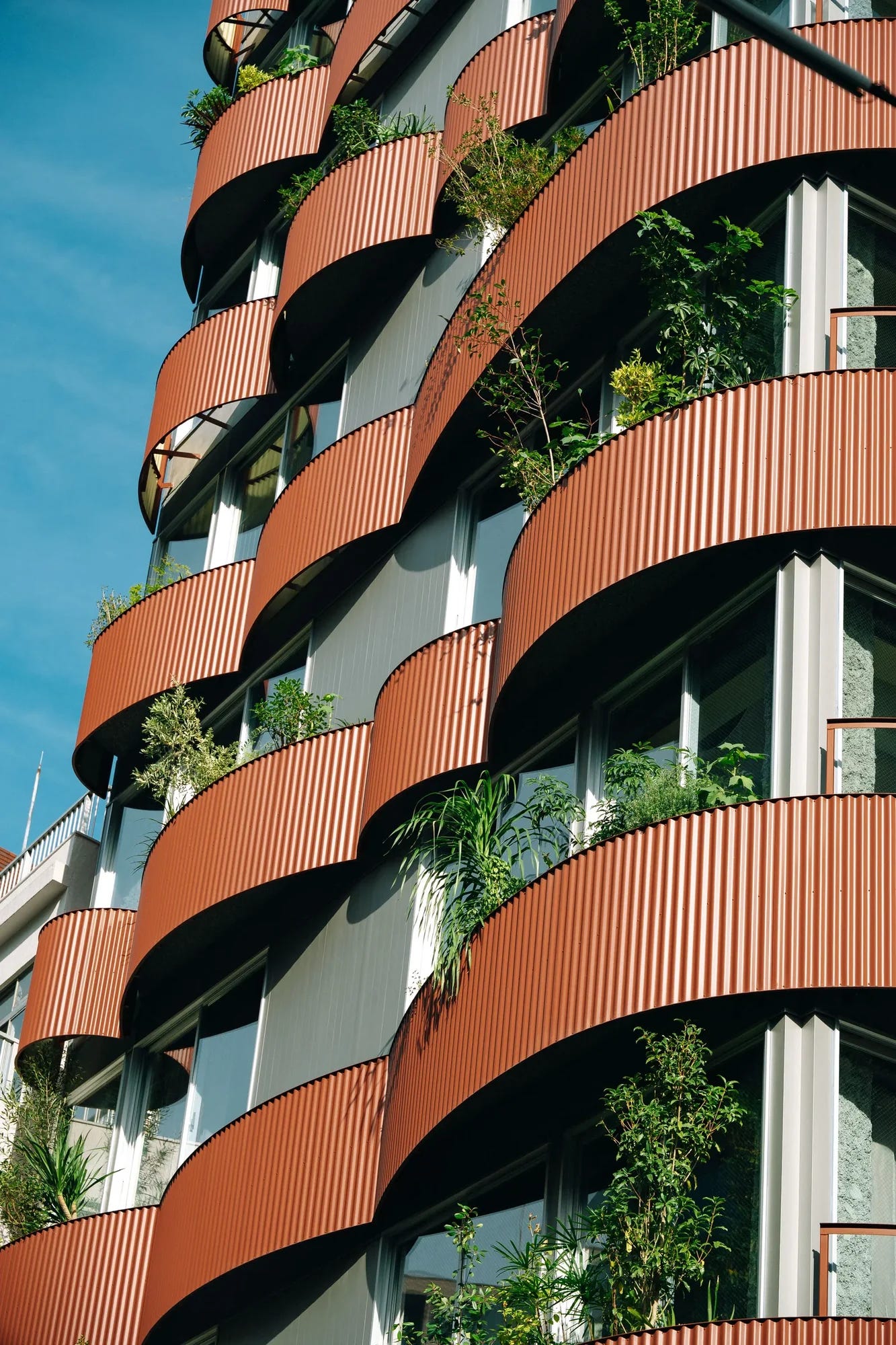
The greenery, brick, and rust-colored metal echo the improvised palette of the surrounding streets, where pots, plants, masonry, and additions have accumulated over time. And despite being nine stories tall, the Kiyoaki Takeda-designed hotel sits comfortably in Nihonbashi’s streetscape, turning the neighborhood’s informal gardening into a kind of vertical facade. Downstairs, a small reception area and Pizza Tane meet the street. No grand lobby or rooftop DJs here — and that’s how Yuta Oka wants it.
DOUBLE SHOT OF ESPRESSO AT PARKLET……………………………………………………………………….¥520 (~$3.30)
NIHONBASHI PALE ALE…………………………………………………………………………………………………¥750 (~$4.30)
TAIYAKI AT YANIGIYA……………………………………………………………………………………………………¥200 (~$1.80)
Oka is the founder of Staple, the firm behind SOIL’s properties, and neighboring hotel, K5. For centuries, Ningyocho, or eastern Nihonbashi, was animated by merchants, wholesalers, and everyday commerce, and as the commercial systems that sustained those streets changed, the neighborhood’s community intensity faded. Oka saw an opportunity to build a hotel as a kind of strong point, a place to attract outsiders to first, then strong enough to gradually build relationships and activity around it.
The original idea was to do this in regional Japan, where the need for new reasons to visit (and new ways to strengthen local economies) was easier to see. Central Tokyo, Oka thought, was too dense, too established, too anonymous for the same model to matter. Then he built K5, just a seven-minute walk from where SOIL now stands: a lush, magnetic destination inside a former bank building, designed to draw people into a financial district that had gone quieter outside office hours. But working in Nihonbashi changed his mind. On the other side of Showa-dori, the broad north–south avenue that marks the shift between Nihonbashi’s western and eastern areas, he began to see a different opportunity: density, he realized, doesn’t automatically create connection.
LEARN MORE ABOUT LINEAR CONCIERGE →
Oka thinks at the scale of a roughly 20-minute walk — the distance within which repeated encounters and local relationships can form. At SOIL, though, much of Staple’s own network is tighter still: a set of places spread within roughly 300 meters around Horidome Children’s Park. There’s Pizza Tane adjoining the small reception downstairs. A couple of minutes away is PARKLET, a bakery conceived as an extension of Horidome Children’s Park. Nearby are Soil work, timsum for wine and dim sum, Overview Coffee, and other small neighborhood spaces, functioning less like hotel amenities than pieces of a wider local ecosystem.
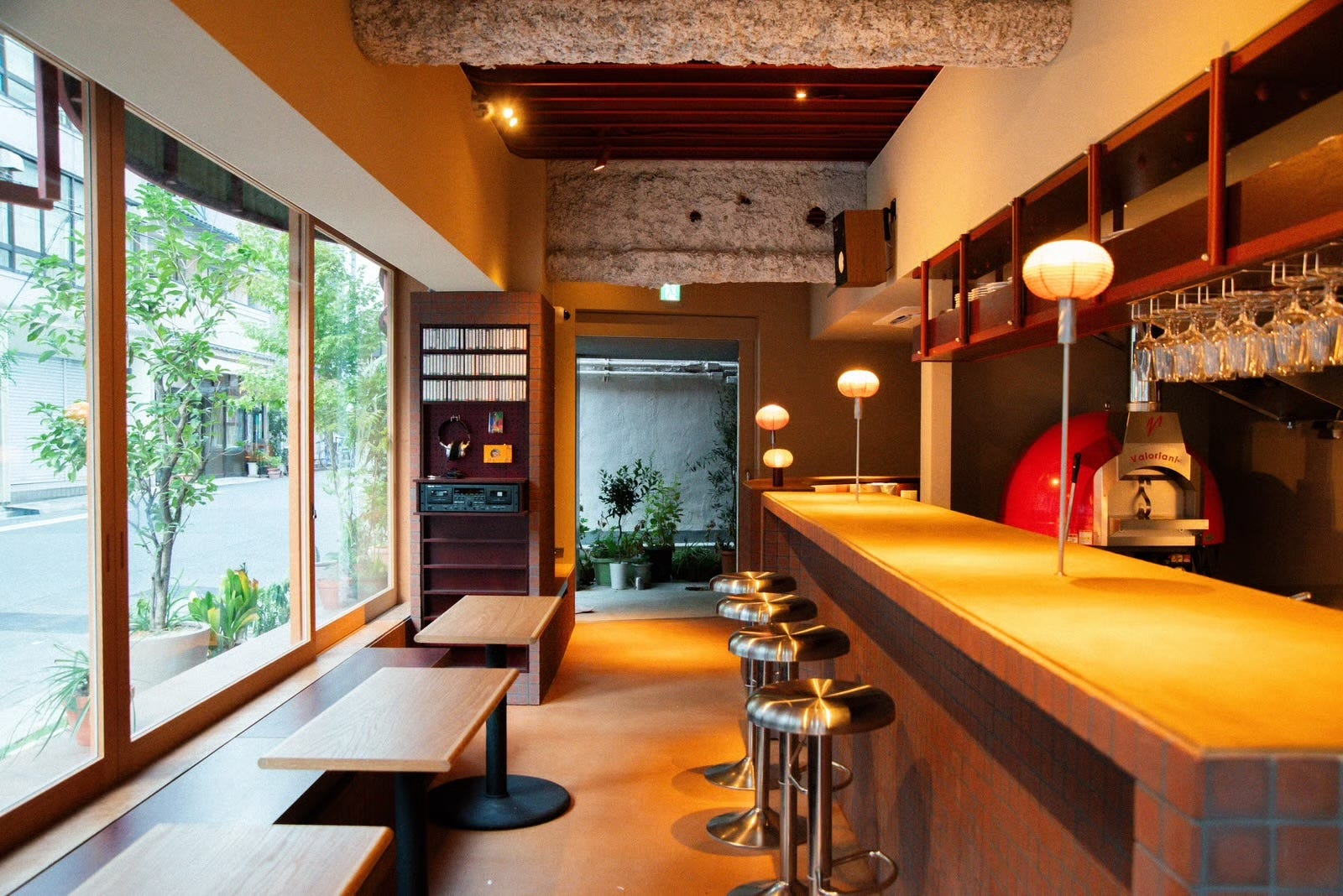
The relationships between those places are intentionally literal as well as conceptual: Pizza Tane’s sourdough starter came from PARKLET, just as plants and cassette tapes have been passed into the hotel from the surrounding community. Even the flow of capital at Staple is designed to be symbiotic — Oka talks about using the profits generated by a successful hotel to support the surrounding area, while GOOD SOIL, the investment company he launched with Sumitomo Mitsui Trust Bank, is designed around recovering capital from one round of development and reinvesting it into the next.
It’d be a mistake to think of SOIL as another lifestyle-hotel concept, in the mold of Ace or Hoxton, which, to their credit, have played a vital role in designing community spaces. SOIL instead seems to pose a slightly different question around activation: what if the community doesn’t need to be created at all? What if it’s already there?
It’s the beautiful part about SOIL, and what makes it feel particularly LINEAR. The more time you spend outside of it, the more complete the hotel begins to feel. Its “amenities” aren’t just Pizza Tane, the cassette player, or the donated plants. They’re the neighborhood spaces around it, including plenty of places Staple doesn’t own at all.