


In this week’s newsletter: We celebrate the houses that become icons — glass-walled statements, sharp corners, beautiful concepts. But too often we forget someone has to live there. Philip Johnson’s Wolfhouse was conceived as a bold expression of midcentury modernism, sited for panoramic Hudson River views, defined by its open plan and expansive glass walls. But for decades the house has struggled to convince anyone to make a full life inside it. This week, we’re looking at what happens when architecture’s big ideas collide with everyday life: morning coffee, privacy, where to put the couch.
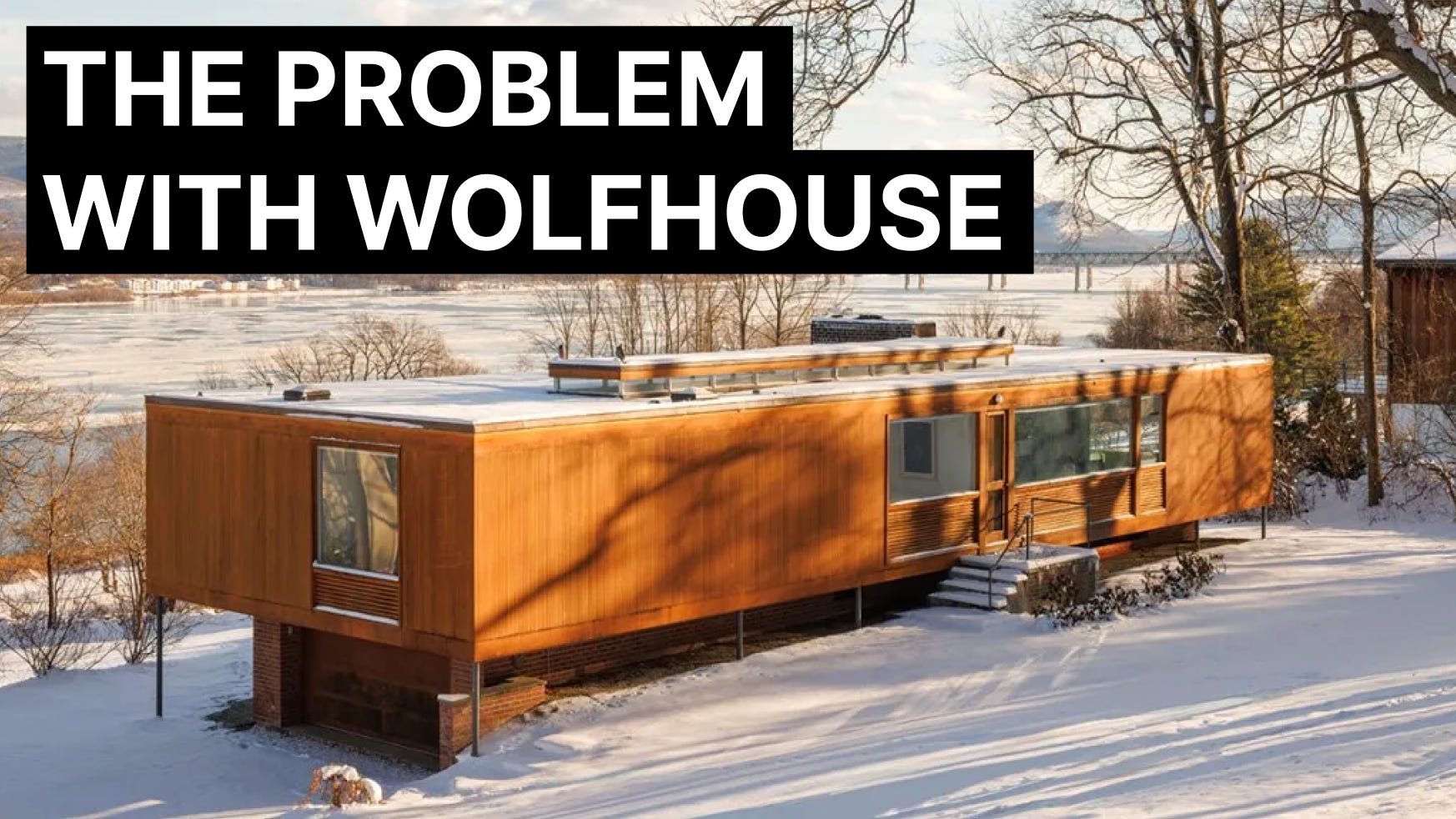
After almost a year of drifting on and off the market, and a million-dollar haircut, Wolfhouse is finally pending sale.
I first stumbled across the Wolfhouse a year ago when it hit the market for $2.9M. I kept checking back, waiting to see what kind of person would buy a Philip Johnson house on a wooded slope above the Hudson.
No one did.
Set on the hills of Newburgh, about an hour north of New York City, Wolfhouse has all the ingredients of a collectible: riverside views, impeccable provenance, midcentury pedigree. It looks like a Philip Johnson house is supposed to look. There’s just one problem: the house kind of sucks.
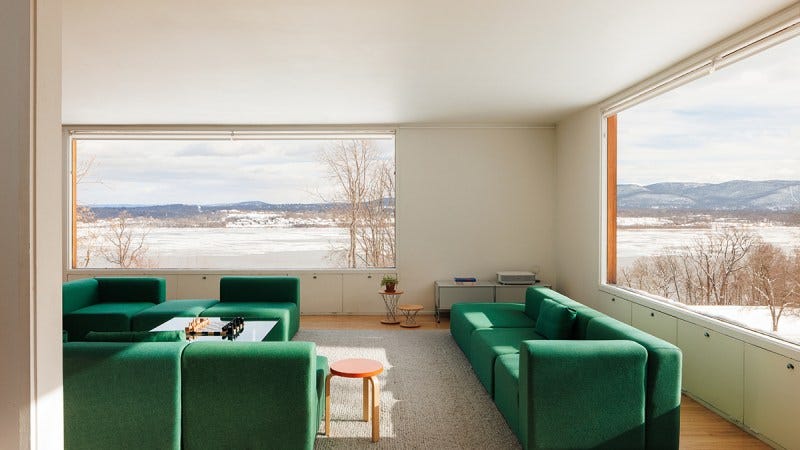
“It was the worst house I ever built,” admitted Johnson to biographer Franz Schulze. Wolfhouse was completed in 1949, the same year he completed the now-landmarked Glass House. And while the Glass House became a manifesto for modernism, Wolfhouse became a bit of a question mark.
The difference is that the Glass House never needed to be a home (though Johnson did live there himself for 56 years). It was built as a statement on transparency and form — comfort and privacy were never the point. Today, it survives perfectly as a museum piece, refusing practical concerns, existing triumphantly as an idea.
Wolfhouse didn’t get that excuse. It had to hold to real life.
Sure, it checks those boxes technically — bedrooms, morning routines (hello, USM kitchen), storage, heat — but the space feels off. The courtyard leaves you strangely exposed, the river is close but emotionally distant, and the circulation never quite guides you.
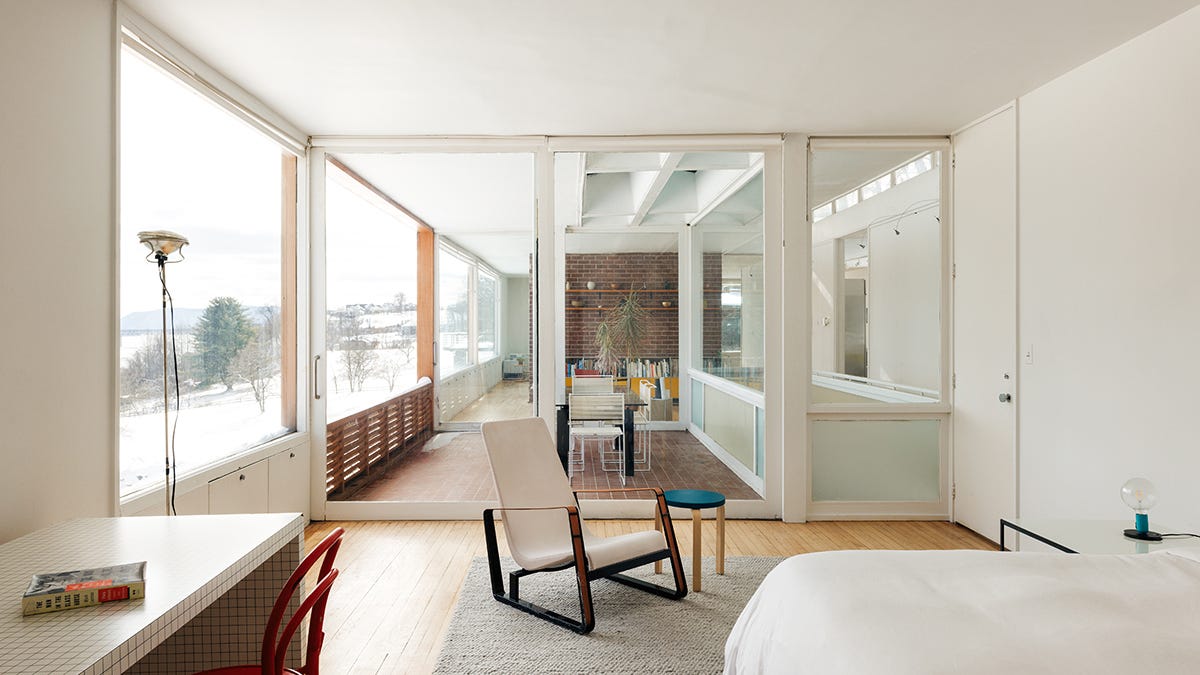
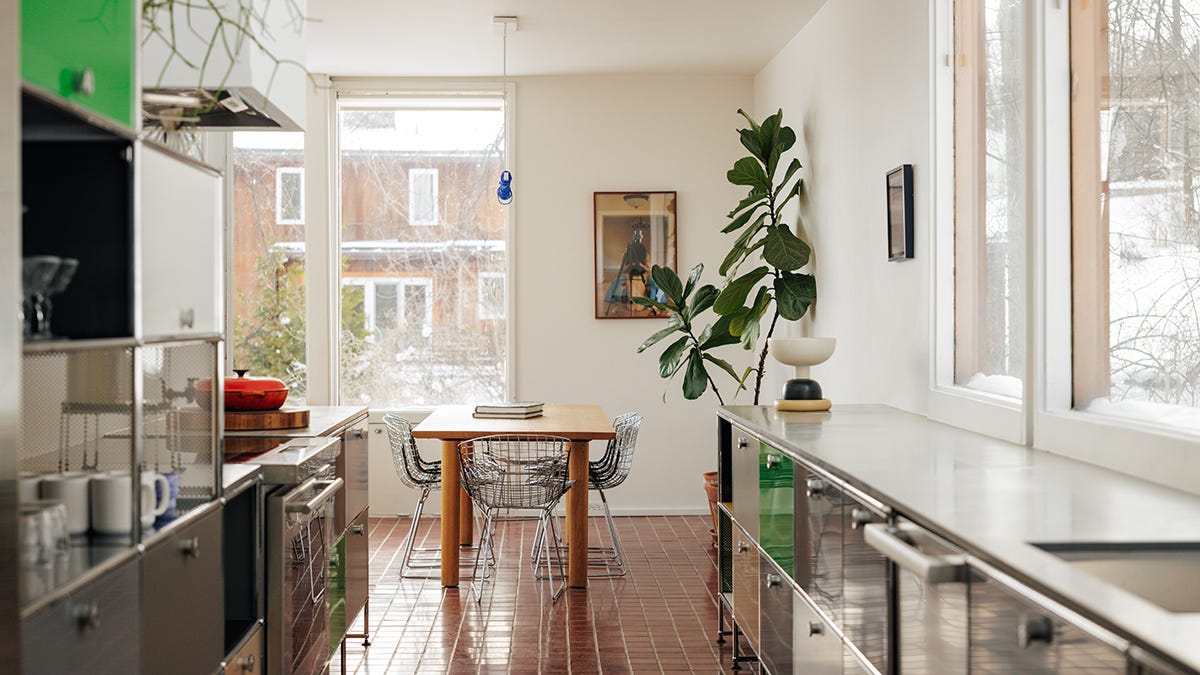
The current owners, Jeremy Parker and Jimmie Ha, deserve real credit. They restored the original layout using archival drawings, and opened the door to artists and guests. They gave the house a community and purpose it never fully had.
But you don’t need to be an architecture critic to feel the awkwardness. There’s a palpable tension that makes you wonder why the room is fighting you.
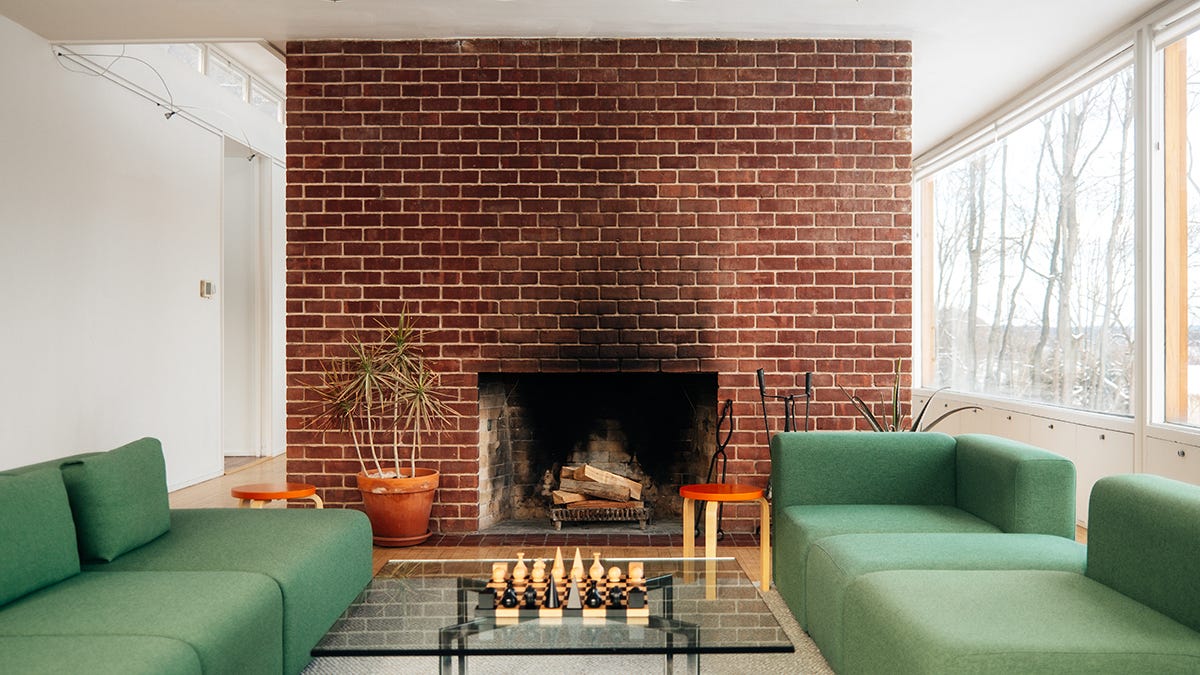
Wolfhouse highlights a bigger trend in the era of inspo feeds and moodboards: most important buildings are judged from the outside — by history, by reputation, by photographs, by TikTok tours. But houses answer to a tougher critic: the person who wakes up inside them.
So what do we do with architecture that matters historically, but doesn’t actually work? Who takes responsibility for flawed heritage? Do we preserve the idea of the life it was supposed to hold?
Someone will eventually fall in love with its flaws, and I’ll be the first in line for a tour when they do. But until then, Wolfhouse remains the house that reminds us: architectural history can forgive a lot. Buyers, not so much.
Hunter and I are shaping Linear’s guides and newsletter formats for 2026. If you’ve been reading for a while, we put together a short, optional reader pulse to help us decide where to focus next. Take the two-minute survey →

This month, we’re scouting stays in Japan, Mexico City, Los Angeles, and New York City. If you’re planning a trip anywhere, we’ll help you find design-led stays that feel like you, and throw in VIP perks along the way. Get started with Concierge →
IN OTHER NEWS
NOT A HOTEL LAUNCHES A MAGAZINE
I’ve admired NOT A HOTEL for years, so the launch of their new magazine, THE NEW JAPAN, feels like a natural extension to their worldview: hospitality as culture, design as a way into place.
I asked their editor-in-chief, W. David Marx, what he hopes the magazine will inspire. He told me:
“As much as there are worries about over-tourism in Japan, the truth is that Japan deserves all these tourists because it’s such a great place to visit. But few people know the immense depth of Japan or the hundreds of incredible places outside of Tokyo and Kyoto. That gives us a clear responsibility in working to expand the possibilities of Japanese tourism for the contemporary moment.”
I’m personally excited to see design media shift toward deeper, more experiential storytelling, and excited to have THE NEW JAPAN as a thoughtful counterpart. I’m looking forward to following where they take it! Their first issue is available to buy on their site — I just got mine in the mail.
I also wrote on the Wolfhouse sale if you're curious, although I came at it with a different angle: https://tristanbeaulieu.substack.com/p/the-edible-yuzu-perfume-bouquet